Harley-Davidson Bagger World Cup: A New Global Thrill for Motorcycle Racing
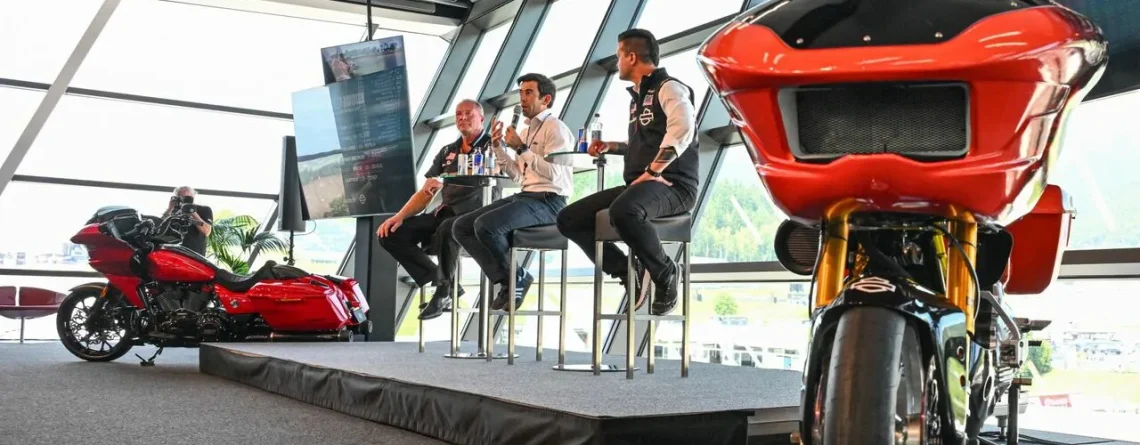
The world of motorcycle racing is about to get a thunderous makeover. On August 15, 2025, at the legendary Red Bull Ring in Austria, Harley‑Davidson and MotoGP™ officially unveiled the Harley‑Davidson Bagger World Cup—the first-ever global racing series exclusively for high-performance Harley bagger motorcycles
This bold initiative marks a historic pivot: the beloved V‑Twin cruisers—known for their touring comfort and American swagger—will now duke it out on the world’s most prestigious motorcycle circuits. The dream sparked earlier this year at Le Mans, where both organizations teased a partnership, building excitement that culminated in this full reveal
2026 Global Racing Calendar: From Texas to Austria
Six electrifying rounds—three in North America, three in Europe—promise high-speed drama and iconic venues:
Austin, USA (COTA): March 27–29
Mugello, Italy: May 29–31
Assen, Netherlands: June 26–28
Silverstone, UK: August 7–9
Aragon, Spain: August 28–30
Red Bull Ring, Austria (Final): September 18–20
From “King of the Baggers” to a Worldwide Movement
This series stems from the rising popularity of bagger racing in the U.S.—notably the King of the Baggers events that emerged at Laguna Seca in October 2020. That initial race was intended as a one-off showcase but quickly became a movement. Promoter Rob Buydos transformed it into the Bagger Racing League (BRL), complete with custom bagger shows, live music, and racing exhibitions. The phenomenon took hold: the 2021 BRL crown was won by Michael Barnes aboard a Road Glide Special Screamin’ Eagle at Utah, and Shane Narbonne triumphed at Sonoma in a turbo-charged Harley from Truck Performance.
Meanwhile, MotoAmerica launched its King of the Baggers class, which became a formal championship by 2021 and expanded to eight rounds in 2024—testament to the format’s soaring popularity.
Racing Titans: Riders, Rivalries & Raw Power
The bagger racing scene isn’t just about spectacle—it’s rich with competitive drama. Riders like Kyle Wyman and James Rispoli, backed by the Harley-Davidson Factory Team, have brought top-tier performance to the category. Wyman, once crowned inaugural King of the Baggers champ in 2021, rode a Screamin’ Eagle-powered Road Glide with a 2 147 cc engine delivering ~160 hp and 131 ft⋅lb of torque.
Even Australian superbike legend Troy Herfoss made headlines by adapting to bagger racing—describing it as “like a two‑wheeled NASCAR” while piloting an 1835 cc Indian Challenger.
The Engineering Behind the Beasts
Transforming a touring bagger into a race machine requires serious modification. Riders and builders strip unnecessary weight, retrofit chassis components (like Trask swing-arms, Kraus suspensions), and fit the bikes with race-spec 17″ rims and Superbike tires such as Pirelli Diablo Superbike. The racing machines yield up to 50 extra horsepower and are leaned aggressively around corners—though riders must be cautious of their large saddlebags scraping curbs.
Cultural Significance: Style Meets Speed
Bagger racing is more than engines and laps—it’s a fusion of tradition and performance. Born from Harley’s touring heritage and the rivalry with Indian Motorcycles, these races turn full-dress cruisers into high-speed spectacles.
Harley’s racing pedigree runs deep—dating back to 1914, from board tracks and NHRA dragsters to XR TT road racers. The Bagger World Cup is more than a championship; it’s a narrative-rich extension of that legacy, now amplified on an international stage.
What Lies Ahead
Harley‑Davidson and MotoGP are now inviting teams, riders, and sponsors to engage in the inaugural 2026 season. With a new global platform, this series promises to energize MotoGP weekends, attract new fan demographics, and position bagger racing as a global motorsport category.
The Harley‑Davidson Bagger World Cup isn’t just a championship—it’s a roaring statement of speed, culture, and evolution.